Nepal is at a pivotal political juncture as millions of citizens prepare to cast their votes in the first general election following the impactful Gen Z-led protests that led to the government’s resignation in 2025. This election represents a crucial turning point for the Himalayan nation, as young voters and reform movements advocate for accountability, economic opportunities, and an end to corruption.
Nearly 19 million voters are eligible to participate in the election, choosing representatives for the 275-seat national legislature. The election follows months of political turmoil sparked by youth-led demonstrations that reshaped the country’s political landscape.
For many observers, the election represents the first real test of whether the energy of the youth protests can translate into lasting political change.
Background: The Gen Z Protests That Changed Nepal
Nepal General Election Sparks After Gen Z Protests
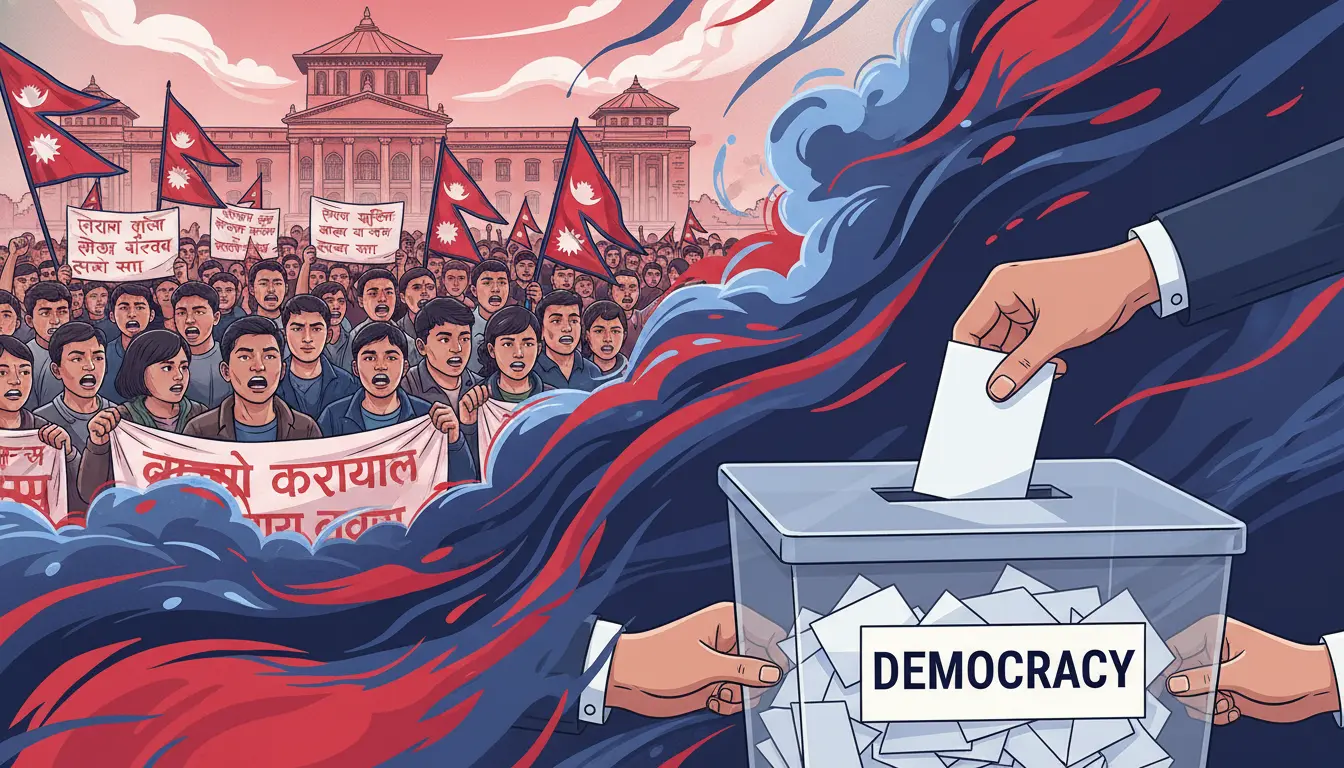
The unrest escalated quickly after the government imposed restrictions on social media platforms, which protesters saw as an attempt to silence dissent. Massive demonstrations soon spread across the country.
Violence during the protests resulted in more than 70 deaths, and the crisis eventually forced then-Prime Minister K. P. Sharma Oli to resign.
Following the collapse of the government:
- The authorities dissolved the parliament.
- An interim administration was formed
- Former Chief Justice Sushila Karki became the interim prime minister
- The authorities scheduled fresh elections for 2026.
This marked the first time Nepal had experienced such a dramatic youth-driven political shift.
Millions Vote Across the Country
Polling stations opened across Nepal with heavy security and strong voter turnout following Gen Z protests during the general election. Authorities deployed security forces nationwide to ensure a peaceful vote.
The election includes:
- 165 seats are elected directly
- 110 seats chosen through proportional representation
Together they form the 275-member House of Representatives, Nepal’s lower parliament.
More than 3,400 candidates from dozens of political parties are competing, making it one of the most competitive elections in the country’s recent history.
Officials expect voter turnout to exceed 65%, reflecting the public’s strong desire for political reform.
New Faces Challenge Traditional Parties
The election prominently showcases new political figures who draw inspiration from the youth movement.
Among the most prominent candidates is Balendra Shah, a former rapper and mayor of Kathmandu who gained national attention during the protests. He is now a leading candidate representing reform-oriented politics and appealing strongly to young voters.
Traditional parties are still major contenders, including:
- Nepali Congress
- Communist Party of Nepal (UML)
Many analysts point out that voters are increasingly frustrated with the long-standing political elites who have dominated Nepal’s politics for decades.
The rise of younger candidates signals a possible shift toward a new generation of leadership.
Key Issues Driving the Election
Several major issues are shaping voter decisions in this historic election.
Corruption
The protests that toppled the government were largely driven by anger over corruption and nepotism within political institutions.
Many voters now expect stronger transparency and accountability from the next government.
Jobs and Economic Reform
Nepal faces high unemployment, especially among young people. Every year, thousands of Nepalis leave the country for jobs abroad.
Economic reform and job creation have therefore become central campaign promises.
Political Stability
Nepal has experienced frequent government changes for decades, which has slowed development and weakened public trust in politics.
Many voters hope the election will produce a stable government capable of delivering reforms.
Youth Voters Could Decide the Outcome
A major factor in the election is the surge of young voters.
More than one million new voters, many of them from Generation Z, have been added to the electoral rolls since the protests.
These voters played a central role in the demonstrations that forced political change. Now they are expected to significantly influence the election results.
Young voters are particularly focused on:
- employment opportunities
- digital freedom
- anti-corruption reforms
- modernization of the economy
Political analysts say their participation could reshape Nepal’s political landscape.
What Happens Next?
Early results are expected soon after voting concludes, though the full outcome may take longer due to Nepal’s proportional representation system.
Once the results are finalized, the winning parties will begin negotiations to form a new government.
The next administration will face several urgent challenges:
- Rebuilding public trust in government
- stabilizing the economy
- addressing corruption allegations
- responding to the demands of the youth movement
How the new leadership handles these issues will likely determine whether the protests lead to long-term reform or simply another cycle of political instability.
Conclusion
Nepal’s 2026 general election represents a defining moment for the country’s democracy. Coming just months after dramatic youth-led protests that toppled the government, the vote is seen as a referendum on the nation’s future direction.
For millions of Nepalis—especially younger voters—the election offers a chance to transform protest energy into political change. The outcome could reshape the country’s leadership, redefine its political system, and determine whether the Gen Z movement’s demands lead to meaningful reforms.
As ballots are counted and a new government takes shape, the world will be watching closely to see whether Nepal’s political upheaval leads to a new era of accountability and democratic renewal.
FAQs
Why is Nepal holding elections in 2026?
Nepal held elections after the 2025 Gen Z protests forced the government to resign. The parliament was dissolved, and a new vote was scheduled to establish a fresh government.
What caused the Gen Z protests in Nepal?
The protests were triggered by anger over corruption, unemployment, and restrictions on social media. Demonstrations quickly spread nationwide, leading to political upheaval.
How many people are voting in the Nepal election?
About 19 million voters are eligible to participate in the 2026 election across thousands of polling stations nationwide.
Who are the main candidates in the election?
Traditional parties such as the Nepali Congress and the Communist Party of Nepal are competing against new political figures like Balendra Shah, who gained support from young voters.