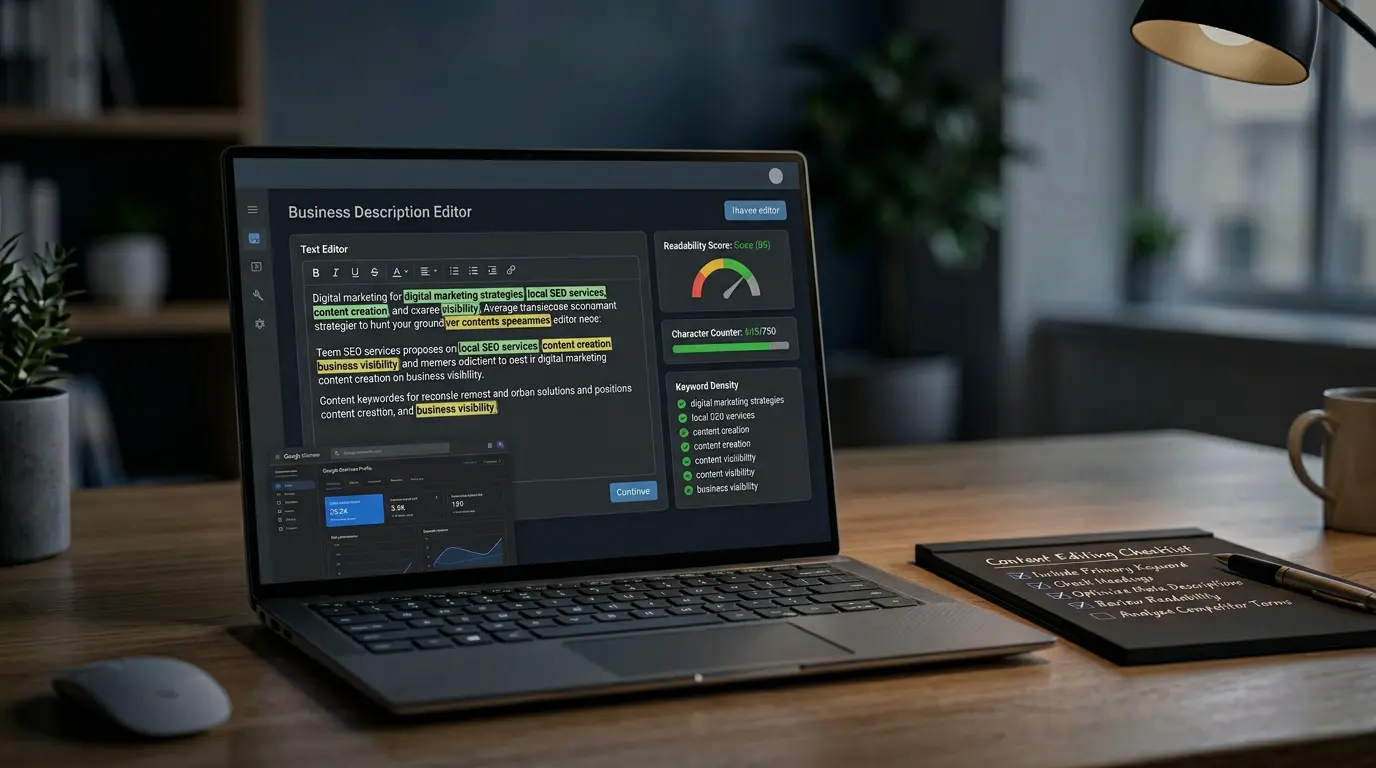
In the digital marketplace, your company profile often shapes a customer’s first impression. That is why following clear business description editing guidelines is essential for visibility, credibility, and search performance. Whether you are updating your website, refining your company bio, or optimizing your Google Business Profile, a structured editing process ensures clarity, compliance, and stronger engagement.
A well-crafted description does more than explain what you do. It communicates value, defines your audience, and strengthens your brand positioning. When edited strategically, it also supports local SEO and improves conversion rates.
Why Business Description Editing Matters in 2026
Search engines evaluate more than keywords. They measure clarity, structure, and user engagement. Therefore, a poorly written company overview can limit your rankings—even if your services are excellent.
Professional editing improves:
- Search visibility
- Brand authority
- Trust signals
- Lead generation
Moreover, platforms like Google prioritize accurate, user-focused information. If your content appears promotional, vague, or keyword-stuffed, it may underperform.
Core Principles Behind Effective Business Description Editing Guidelines
Strong editing follows a strategic structure. Instead of rewriting randomly, focus on refinement.
1. Clarity Before Creativity
Your opening sentence should clearly explain what your business does. Avoid abstract statements. For example, replace “We deliver innovative solutions” with a precise explanation of your services and target audience.
2. Audience Positioning
Every strong company description identifies who it serves. Whether you target startups, local customers, or enterprise clients, define your target audience clearly. This approach improves relevance and supports local business SEO.
3. Natural Keyword Integration
While optimizing, avoid repeating phrases. Instead, blend primary and related terms such as:
- company profile writing
- professional business bio
- Google Business Profile description
- small business branding
- local SEO optimization
Search engines reward natural language over repetition.
4. Structured Flow
A professional format typically follows this order:
Introduction → Problem → Solution → Unique Value → Call to Action
This logical flow increases readability and engagement.
Optimizing for Google Business Profile
When editing for Google Business Profile, technical accuracy matters. The description limit is 750 characters. However, the first 250 characters carry the most weight.
To comply with platform standards:
- Avoid promotional pricing language
- Do not insert URLs or phone numbers.
- Maintain professional tone
- Focus on services and location relevance.
These adjustments align with platform policies while improving discoverability.
Website Company Description Optimization
Unlike directory listings, your website allows more flexibility. However, structure remains essential.
An effective homepage summary usually ranges from 15 to 300 words. A full company overview may extend to 600 words, provided the content remains focused and concise.
Additionally, internal linking enhances SEO. For example, linking to service pages strengthens topical authority and improves crawlability.
Common Editing Mistakes That Reduce Rankings
Even established businesses make structural errors. Overly generic messaging weakens authority. Long, dense paragraphs reduce readability. Excessive self-praise lowers credibility.
Instead of exaggeration, provide measurable value. Mention experience, certifications, industries served, or unique processes. Specificity builds trust faster than adjectives.
How Top Ranking Websites Structure Their Descriptions
When analyzing high-ranking pages for this topic, several patterns appear:
- They prioritize clarity over marketing language.
- They explain editing steps rather than offering vague advice.
- They integrate SEO naturally without visible keyword repetition.
- They include examples and structured formatting.
Many authority sites focus heavily on general writing tips. However, they often lack detailed SEO integration or a conversion strategy. That gap creates opportunity.
If you combine structured editing advice with local SEO insights and real examples, your content can outperform competitors targeting the same search term.
Strategic Comparison With Top Results
Top-ranking pages typically fall into two categories:
Marketing blogs – These provide broad advice but lack technical SEO.
SEO software blogs – These emphasize keyword placement but overlook branding psychology.
A well-balanced article should include:
- Writing structure guidance
- SEO best practices
- Platform compliance rules
- Conversion-focused insights
By merging these elements, you create stronger satisfaction of search intent than single-focus competitors.
Final Thoughts
Strong company messaging does not happen by accident. It requires clarity, structure, and strategic optimization. When applied correctly, business description editing guidelines transform generic summaries into high-performing brand assets.
In 2026, competition continues to increase. Therefore, businesses that combine readability, SEO alignment, and audience positioning will rank higher and convert faster.
If executed properly, this topic presents a strong opportunity due to its high search demand and low keyword difficulty. With optimized structure, balanced keyword use, and consistent updates, ranking in the top results is achievable.