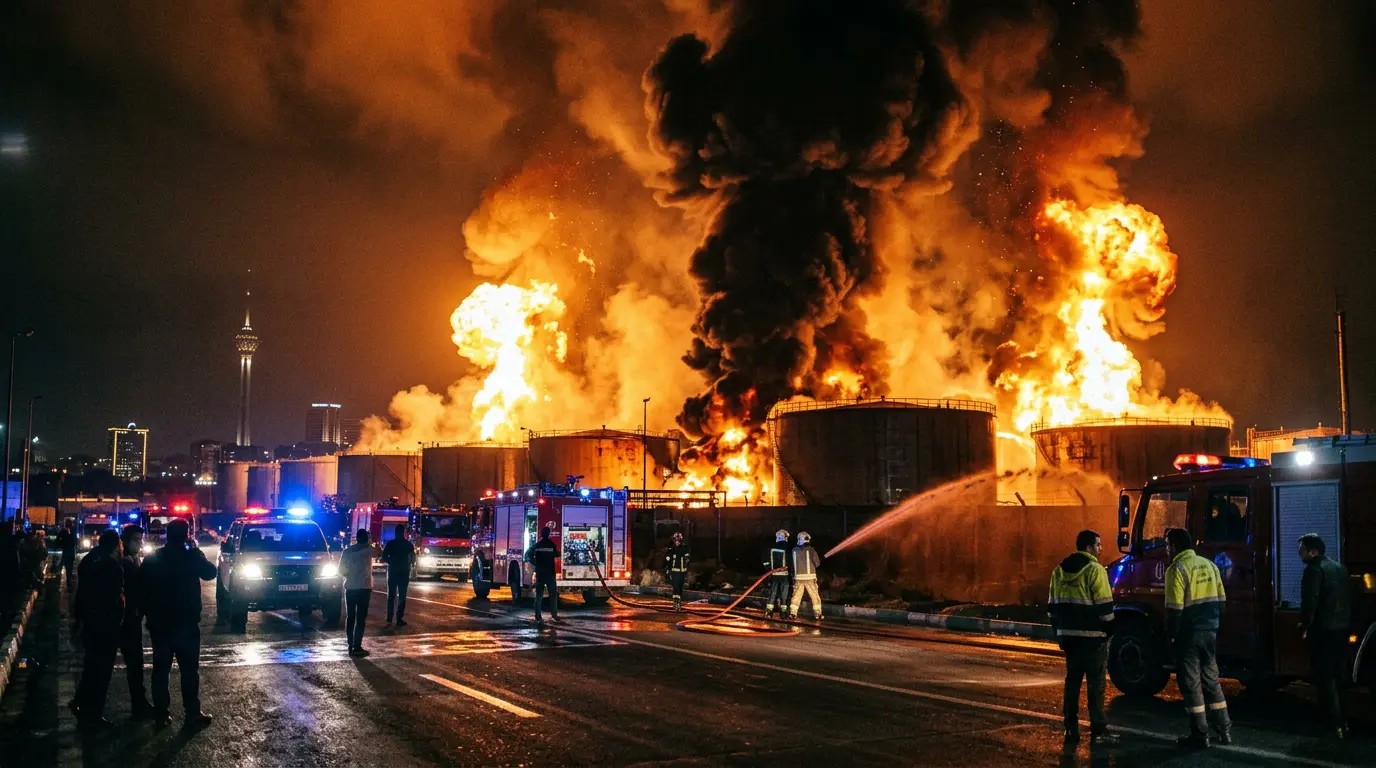
Tehran, March 2026 — Residents across Iran described terrifying scenes after a series of overnight airstrikes hit major oil storage facilities around the capital, Tehran, igniting massive fires and filling the sky with thick black smoke. Many witnesses said the explosions were so powerful that “night turned into day” as flames and fireballs illuminated the city skyline. Iran oil depot strikes
Massive Blasts Light Up Tehran’s Sky
The strikes targeted several key fuel storage sites and oil depots in Tehran and nearby Alborz province, marking one of the most significant attacks on Iran’s energy infrastructure since the war escalated. Multiple oil storage depots and a petroleum logistics center were reportedly hit, causing large fires that burned for hours. Iran oil depot strikes
Residents shared dramatic accounts of the explosions. One witness said the sky suddenly glowed orange as flames rose high above the city, making the night appear like daylight. Videos circulating online showed towering fireballs and thick smoke spreading across the capital.
At least several people were killed and others injured, including tanker drivers working near the fuel facilities at the time of the attack. Emergency crews rushed to contain the fires as fuel tanks continued to burn.
Toxic Smoke and “Unbreathable” Air
The strikes triggered a serious environmental and health crisis. Huge plumes of smoke blanketed large parts of Tehran, leaving residents struggling to breathe. Some people reported burning eyes, skin irritation, and breathing difficulties.
Iranian authorities warned that toxic chemicals released by the fires could cause acid rain, urging residents to stay indoors and avoid exposure to polluted air. The Iranian Red Crescent also warned that hazardous gases from burning fuel—such as hydrocarbons and sulfur compounds could pose long-term health risks.
Part of Escalating Regional Conflict
The attacks are part of an intensifying military confrontation involving Iran, Israel, and the United States. Israeli officials said the fuel facilities were used to support Iran’s military operations. While Iranian officials condemned the strikes as attacks on civilian infrastructure.
The broader conflict has already caused thousands of casualties and widespread destruction across the region. Raising fears of further escalation and regional instability.
Fear and Uncertainty Among Civilians
For many Iranians, the strikes have created a sense of panic and uncertainty. Some residents described the aftermath as “apocalyptic,” with the city covered in smoke and soot. Others said the air was so polluted that they feared leaving their homes.
Despite the danger, many people remain in the capital because travel costs and ongoing instability make evacuation difficult. Meanwhile, authorities continue firefighting operations and monitoring air quality as the situation evolves.