Introduction
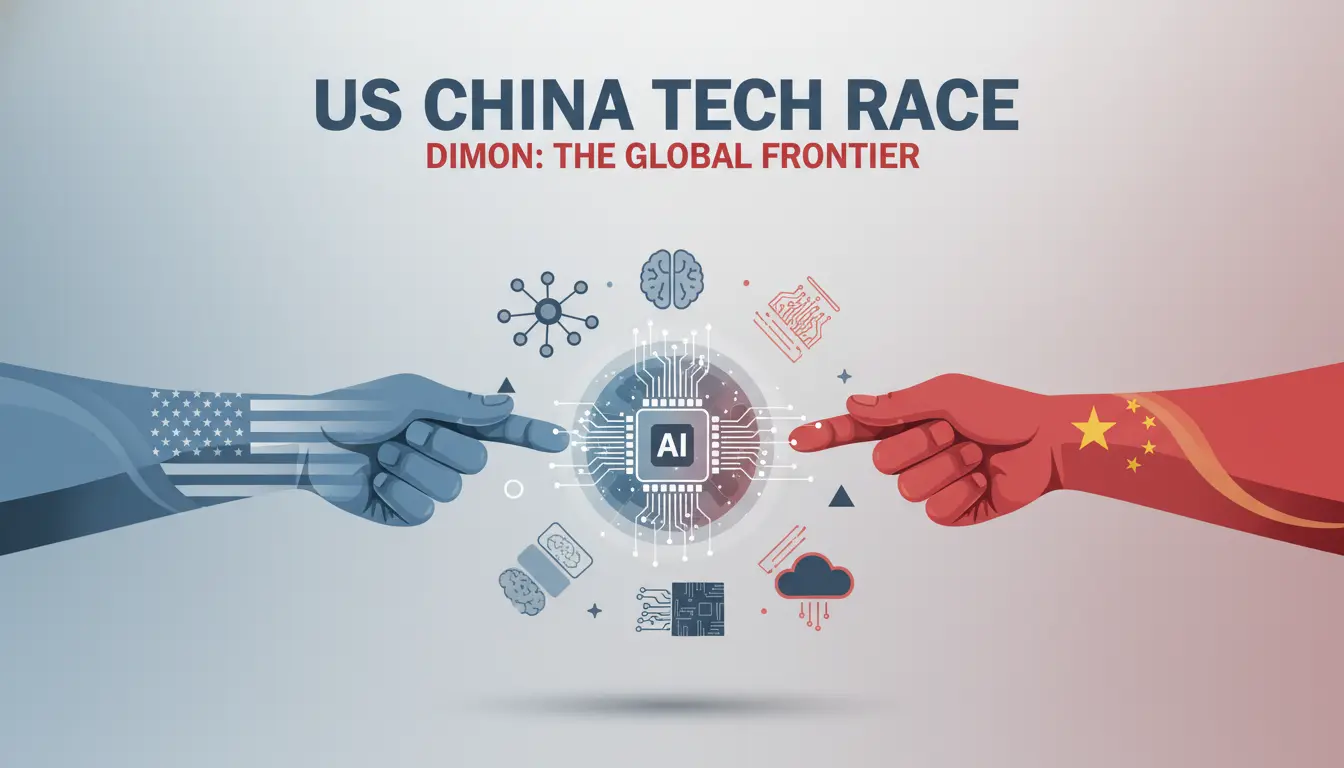
The technology rivalry between the United States and China has become one of the most defining global issues of the 21st century. Both nations are investing billions in innovation, research, and digital infrastructure to dominate the next era of technological advancement. From artificial intelligence to semiconductor manufacturing, the competition spans multiple critical industries that influence global power and economic growth. Us China technology competition dimon
Recently, major financial and business leaders have also started warning about the broader implications of this race. Among them, JPMorgan CEO Jamie Dimon has emphasized the importance of maintaining technological leadership and strengthening economic resilience. His remarks highlight how closely global markets are watching the us China technology competition dimon discussed in economic forums and business discussions.
Furthermore, this rivalry is no longer limited to technology companies alone. Governments, universities, and multinational corporations are deeply involved in what many experts call the defining innovation battle of our time. As the global digital economy continues to expand, the outcome of this technological contest could shape economic leadership for decades.
The Rise of US-China Technology Rivalry
The rivalry between the United States and China did not emerge overnight. Instead, it developed gradually as China rapidly expanded its technological capabilities during the past two decades.
Initially, China focused heavily on manufacturing and infrastructure. However, as its economy grew, the country began investing aggressively in research and development. According to global innovation reports, China now ranks among the world’s top spenders on R&D.
At the same time, the United States has long maintained leadership in advanced computing, software development, and cutting-edge research. American universities and technology firms continue to drive breakthroughs in fields ranging from artificial intelligence to biotechnology.
However, the balance has started to shift.
Several factors contributed to the intensifying US-China technology rivalry, including:
- Rapid growth of Chinese tech companies
- Government-backed innovation programs
- Expanding global digital infrastructure
- Strategic competition for technological influence
Consequently, the competition has transformed into a broader China vs US technology war affecting global supply chains, international policies, and innovation ecosystems.
Jamie Dimon’s Perspective on the Global Tech Race
Jamie Dimon has repeatedly warned that technological leadership will play a crucial role in determining future economic power. As the head of one of the world’s largest financial institutions, he carries significant weight in global markets.
Dimon argues that the United States must remain competitive in areas such as artificial intelligence, advanced manufacturing, and cybersecurity. According to his perspective, innovation is not only about economic growth but also about national security and geopolitical stability.
Therefore, the US China technology competition dimon has referenced reflects a much broader concern about global leadership in emerging technologies.
Business leaders increasingly share this concern because the outcome of the technology race will impact:
- International investment flows
- Corporate supply chains
- National economic strategies
- Global financial stability
Moreover, Dimon has emphasized that innovation requires long-term investment in education, infrastructure, and scientific research. Without these investments, countries risk losing their competitive advantage in the rapidly evolving digital economy.
Key Areas of Competition Between the US and China
The modern global technology competition involves multiple advanced sectors. Several industries have become central battlegrounds in the innovation race.
Artificial Intelligence
Artificial intelligence is the most significant area of competition. Both countries are investing heavily in AI research, machine learning, and automation technologies.
The AI competition between the US and China focuses on:
- Autonomous vehicles
- Smart city infrastructure
- Predictive analytics
- Military applications
- Healthcare innovation
American companies currently lead in advanced AI research. However, China has rapidly expanded its data capabilities and government-supported development programs.
As a result, experts believe the AI race will strongly influence the future of global technology leadership.
Semiconductor Industry
Semiconductors are the foundation of modern digital devices. Everything from smartphones to data centers relies on advanced microchips.
The semiconductor race between the US and China is particularly intense because chip manufacturing determines technological independence.
The United States currently dominates semiconductor design and high-end chip production. However, China has invested billions into developing domestic manufacturing capabilities.
This has led to stricter export controls, new industrial policies, and increasing competition for supply chain security.
Telecommunications and 5G
Telecommunications networks represent another critical arena of the geopolitical tech rivalry.
China has become a major player in 5G infrastructure, exporting telecommunications equipment worldwide. Meanwhile, the United States and its allies are focusing on building alternative networks and securing digital communications systems.
This competition has significant geopolitical implications because telecommunications infrastructure affects global connectivity, cybersecurity, and data control.
Quantum Computing and Emerging Tech
Quantum computing is still in its early stages, yet it has the potential to revolutionize encryption, scientific research, and complex simulations.
Both countries are funding large-scale research programs in:
- Quantum computing
- Advanced robotics
- Space technologies
- Next-generation energy systems
Therefore, the US-China innovation battle extends far beyond current technologies and into the foundations of future scientific breakthroughs.
Economic and Geopolitical Impact of the Technology Competition
The economic competition between the US and China extends into global markets and international alliances.
First, technology industries are among the largest drivers of economic growth worldwide. Companies involved in AI, semiconductors, and digital infrastructure contribute trillions of dollars to the global economy.
Second, supply chains have become more politically sensitive. Governments are now prioritizing domestic manufacturing and strategic industries.
As a result, several major trends have emerged:
- Diversification of technology supply chains
- Increased government subsidies for innovation
- Strategic partnerships between allied nations
- Rising restrictions on sensitive technology exports
These developments show how the US China technology competition Dimon has mentioned influences global economic policies.
Furthermore, international alliances are increasingly shaped by technological cooperation. Countries are aligning their digital infrastructure strategies with trusted partners to ensure security and reliability.
[Internal Link Placeholder: Global Technology Policy Analysis]
[External Authority Reference Placeholder: International Technology Policy Report]
How the Technology Race Could Shape the Future
The outcome of the global technology competition could reshape the balance of global power.
If one country gains a significant technological advantage, it may influence:
- Global economic leadership
- Digital infrastructure standards
- Artificial intelligence development
- Military and cybersecurity capabilities
Moreover, technological leadership can drive innovation ecosystems that attract talent, investment, and research collaboration.
For example, nations leading in innovation typically benefit from:
- Strong startup ecosystems
- High-tech manufacturing hubs
- Advanced research institutions
- Global venture capital investment
Therefore, the us china technology competition dimon discussed reflects a broader struggle for innovation dominance in the digital era.
Challenges Both Countries Face
Despite their strengths, both nations face significant challenges in maintaining technological leadership.
Regulatory Pressures
Technology industries often face strict regulations regarding data privacy, cybersecurity, and market competition. These regulations can slow innovation or create compliance challenges.
Talent Shortages
Highly skilled engineers, scientists, and AI researchers are essential for technological progress. However, global demand for these professionals continues to rise.
Technological Dependencies
Even major economies rely on global supply chains. For example, semiconductor production involves multiple countries across design, fabrication, and assembly stages.
These dependencies highlight how interconnected the global technology ecosystem has become.
[Internal Link Placeholder: Global Semiconductor Industry Guide]
What This Means for Businesses and Investors
The US China technology competition Dimon highlighted, also carries important implications for businesses and investors.
Technology companies must now consider geopolitical risks when expanding internationally. Supply chain disruptions, regulatory changes, and export restrictions can significantly impact operations.
Investors are also watching the competition closely because emerging technologies often drive long-term market growth.
Key investment areas include:
- Artificial intelligence startups
- Semiconductor manufacturing
- Cybersecurity solutions
- Cloud computing infrastructure
Additionally, companies are increasingly diversifying production networks to reduce geopolitical risks.
In global markets, competition could create both opportunities and volatility. Industries that adapt quickly to technological changes may benefit the most.
Conclusion
The global technology race between the United States and China represents far more than a competition between two economic powers. Instead, it is a struggle that could determine the future structure of the digital economy and the balance of global influence.
Jamie Dimon’s remarks have drawn attention to the broader implications of this rivalry. His warnings highlight the need for continued investment in innovation, education, and technological infrastructure.
The US China technology competition Dimon has emphasized is likely to intensify in the coming years. Emerging technologies such as artificial intelligence, quantum computing, and advanced semiconductors will remain central to the race.
However, innovation leadership will not depend solely on technological breakthroughs. It will also require strong institutions, skilled talent, and international collaboration.
Ultimately, the country that successfully combines these elements may shape the future of global technology leadership for decades to come.
FAQ Section
What did Jamie Dimon say about US-China technology competition?
Jamie Dimon has warned that technological leadership will be a key factor in determining economic and geopolitical power. He emphasized the importance of investment in innovation, research, and education to ensure long-term competitiveness in emerging technologies.
Why is the US and China technology race important?
The technology race matters because advanced technologies influence economic growth, national security, and global influence. Leadership in fields like artificial intelligence and semiconductors can shape international markets and digital infrastructure.
Which technologies are central to the US-China rivalry?
Key technologies include artificial intelligence, semiconductor manufacturing, telecommunications networks, quantum computing, and cybersecurity systems. These sectors play crucial roles in economic competitiveness and future digital innovation.
How could the technology competition affect global markets?
The competition may reshape supply chains, influence international trade policies, and drive new investments in innovation. As countries prioritize technological independence, businesses and investors may face both opportunities and market volatility.