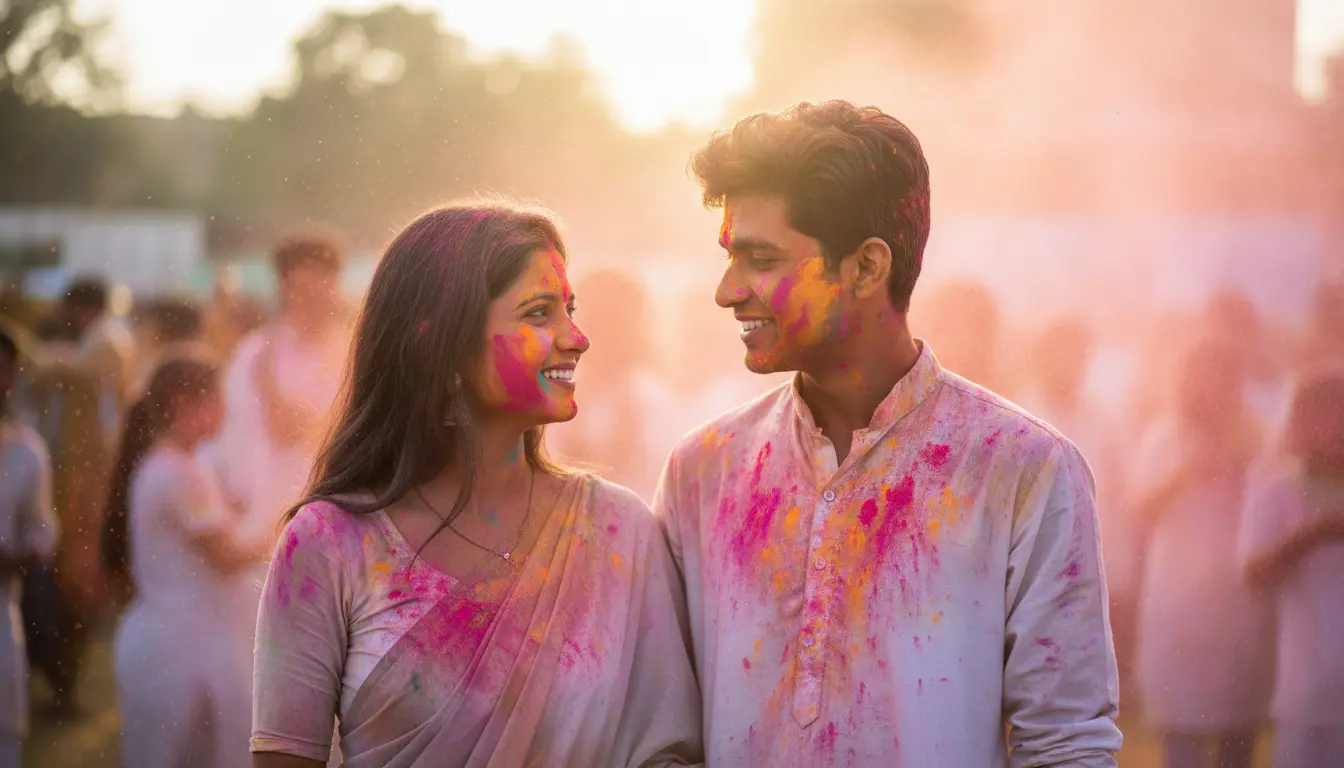
The Holi festival is one of the most vibrant and joyful celebrations in the world. Observed primarily in India and Nepal, this colorful Hindu festival marks the arrival of spring and symbolizes the victory of good over evil. Each year, millions of people gather in streets, temples, and homes to celebrate the spirit of love, renewal, and unity that defines the festival of colors.
The Mythological Roots of Holi Festival
The origins of the Holi festival are deeply connected to Hindu mythology. One of the most famous legends is the story of Prahlada and Holika. Prahlada’s devotion protected him from harm, while Holika, who tried to destroy him, was defeated. This story represents the triumph of faith and righteousness.
Another popular tradition links the festival of colors to Lord Krishna and his playful celebrations with Radha and the gopis in Vrindavan. Their stories of love and color-throwing are still reenacted today, especially in Mathura and Vrindavan.
How Holi Festival Is Celebrated
The Holi festival begins with Holika Dahan, a ritual bonfire held on the eve of the main celebration. Families gather around the fire, offer prayers, and symbolically burn away negativity and evil.
The following day is filled with excitement and color. People throw powdered colors known as gulal, splash colored water, dance to music, and enjoy festive foods. Strangers warmly greet each other, forget old disputes, and come together in harmony as communities.
In places like Mathura and Barsana, the celebrations are especially grand. Barsana is famous for Lathmar Holi, where women playfully chase men with sticks in a symbolic and entertaining ritual.
Holi Festival Beyond India
Although the Holi festival originated in India, it has gained worldwide popularity. Countries such as the United States, the United Kingdom, Australia, and Canada now host large-scale Holi-inspired events. These celebrations attract people from diverse cultures who gather to experience the joy of colors, music, and unity.
The global spread of the festival of colors highlights its universal message: love, equality, and togetherness. It is no longer only a religious celebration but also a cultural event that promotes peace and friendship.
Traditional Food and Festive Spirit
No Holi festival celebration is complete without traditional food. Families prepare sweets like gujiya and drinks like thandai, flavored with saffron and cardamom. Sharing these treats strengthens family bonds and enhances the festive atmosphere.
In recent years, people have also become more environmentally conscious. People now widely use natural, eco-friendly colors to ensure the festival of colors remains safe and sustainable.
The True Meaning of Holi Festival
Beyond the colors and celebrations, the Holi festival carries a deeper meaning. It teaches forgiveness, renewal, and the importance of letting go of negativity. It reminds people to embrace life with positivity and joy.
As the colors wash away at the end of the day, what remains is laughter, stronger relationships, and unforgettable memories. The festival of colors continues to inspire millions around the world, proving that life is always brighter when shared with others.